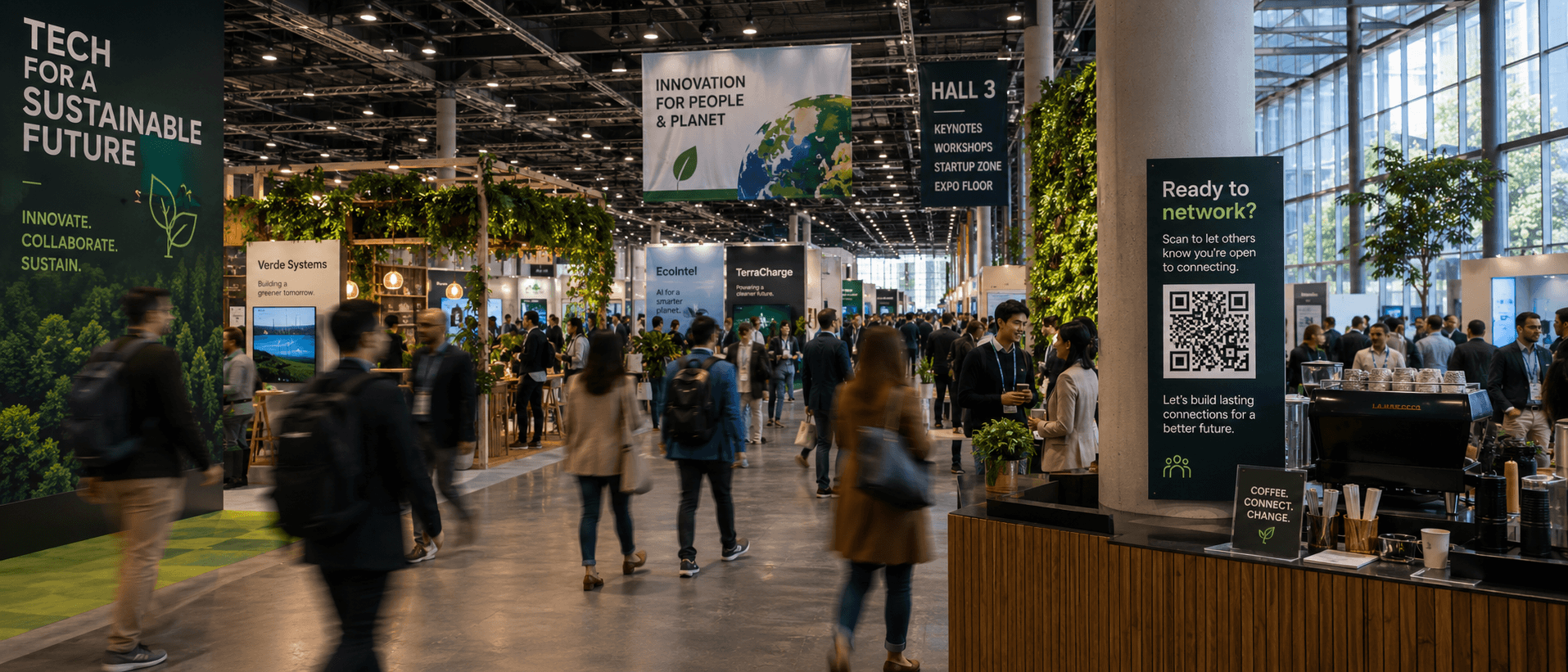
Personalized conference experience
Most event apps are seen as simply an agenda. Our aim was to turn this Vancouver based conference application into a digital companion that builds onto the attendees experience.
The dynamics of a conference that plays to the hand of organizers.
One of the valuable advantages of building an application for people attending a conference is a near controlled environment. We know the layout of the conference, the weather, where attendees are, who is around them, and how the day unfolds. This gold mine of information is a perfect storm for creaating hyper-personalized experiences that conferences can capitalize on.
There are many reasons people attend conferences, from sales to networking to even finding their next career move. We interviewed 100 people, and found that there was a correlation between the seniority level and their goals. To simplify our findings for the short timeframe we had, we took the two major groups and the common themes between them.
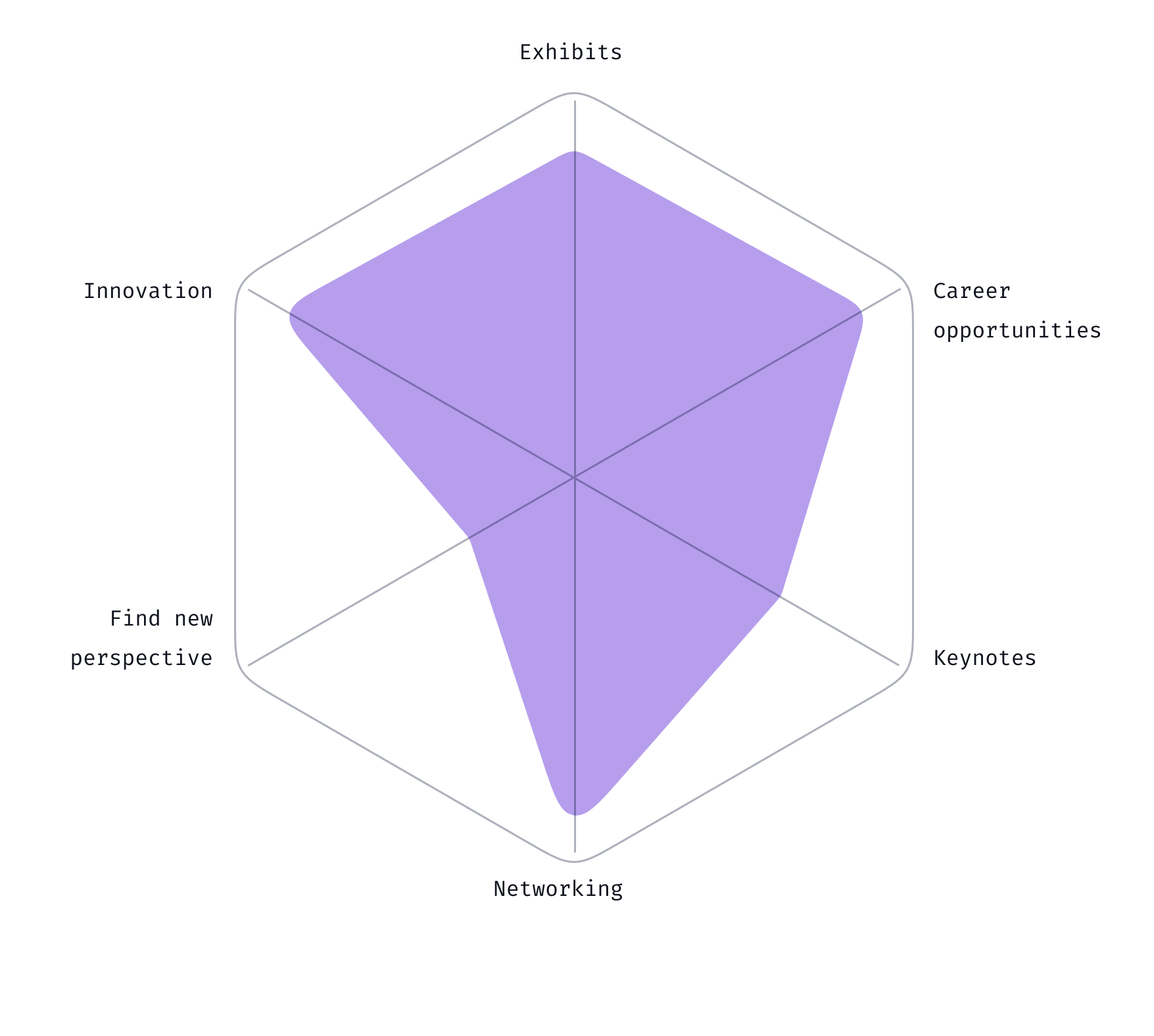
Early-mid level attendees
We found that early to mid career attendees are there to learn about new career opportunities and network. To clarify on one point, it isn't that they are looking for a new job, rather they stated that they are exploring the different career paths they have in front of them through networking and meeting others in their field.
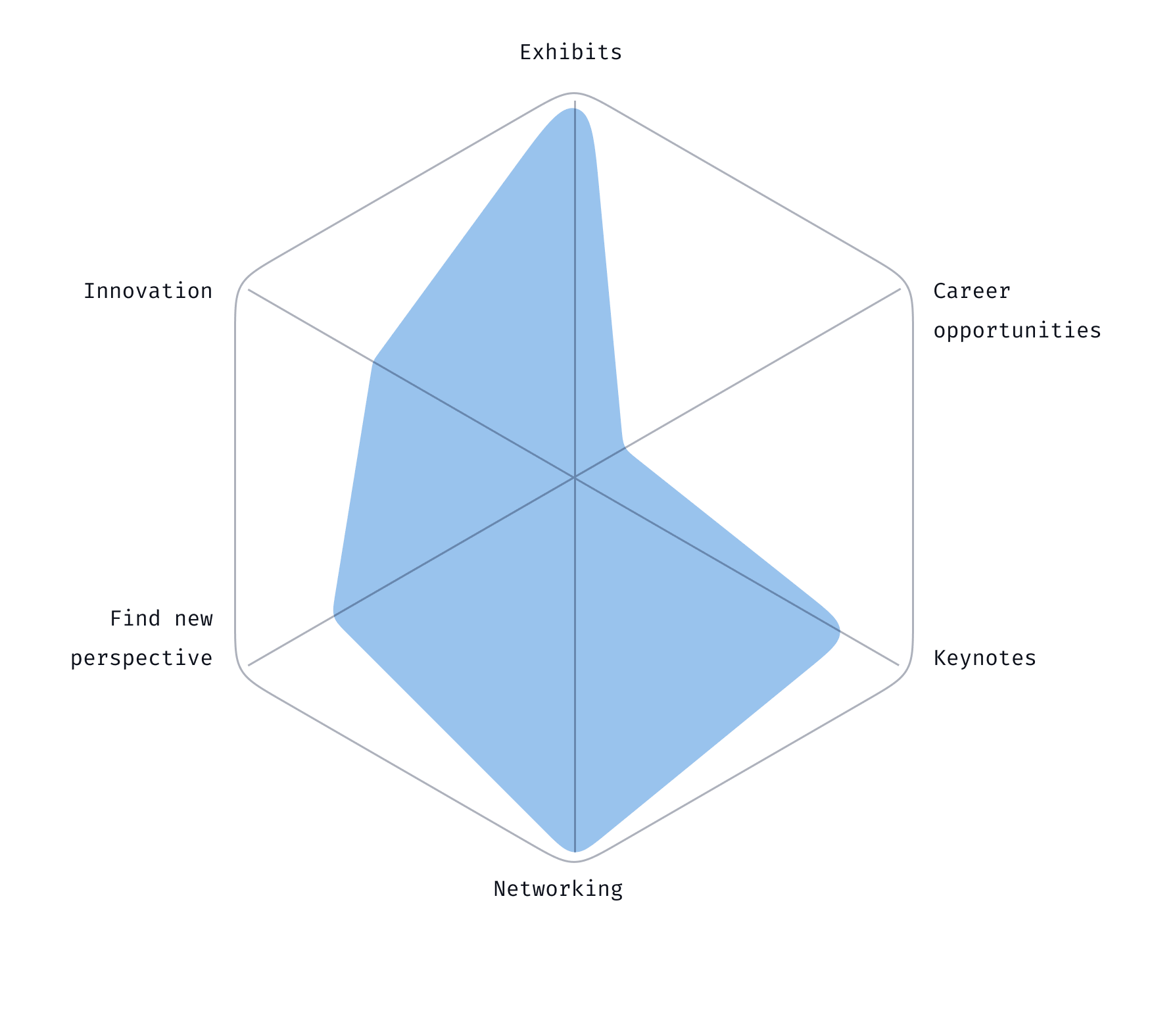
Senior level attendees
On the flip side, most senior attendees seem to be invested in the company they are working at and look to network and promote their products and services. So, even though both groups we analyzed are high in the networking category, they clearly have very different purposes and goals in mind.
Designing around attendee goals
By combining agenda data, indoor location by the use of bluetooth beacons, and preference signals, the app may surface the right information at the right moment; instead of waiting to be searched for.
01. Downtime awareness
Gaps in attendee schedules are inevitable. Being aware of the gaps and knowing where attendees are can turn that down-time into productive and/or leisure time to rest before the next item on their agenda. For example, our solution is to place QR codes in strategic locations around the venue to allow people to create an open invitation to start a conversation.
02. Local business partnerships
One of the biggest missed opportunities is partnering with local businesses nearby. By giving deals to restaurants or surfacing gift shops, the huge crowd brought to the city will help local businesses. Now it's not just a large crowd adding traffic to the streets, but its a major hub that helps the local city economy and businesses.
03. Timely speaker notes and recaps
One of the challenges attendees face is making a choice. Two keynotes are happening in two different halls at the same time. Both of which the attendee is interested in. The proposed solution is to allow the attendee to input why they are interested in the talk, and the application with the help of AI can build an automated powerpoint or PDF that summarizes key points of interest with their timestamps.
Simplifying complex architecture
The product at hand has been in production for a long time and has been servicing many large conferences. Due to the commplexity of the architecture, the proposal to rearchitect the entire application as a first pass is not feasible. The operations of the team to deploy for each conference, and each conference needs with customized features is highly complex. The diagram below only shows the surface level architecture, where many items displayed can be up to four levels deep. There are also various 'specialized' navigation tabs for specific larger clients not shown here.
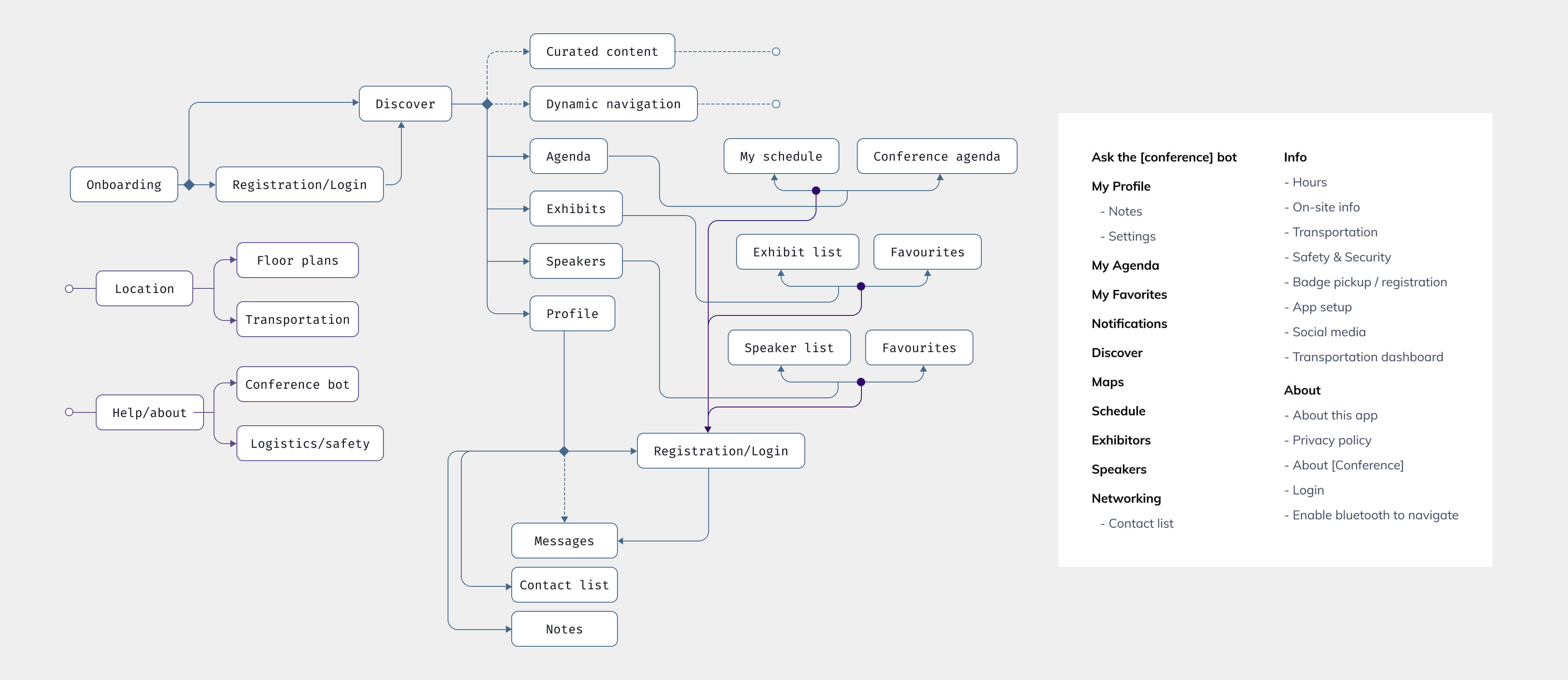
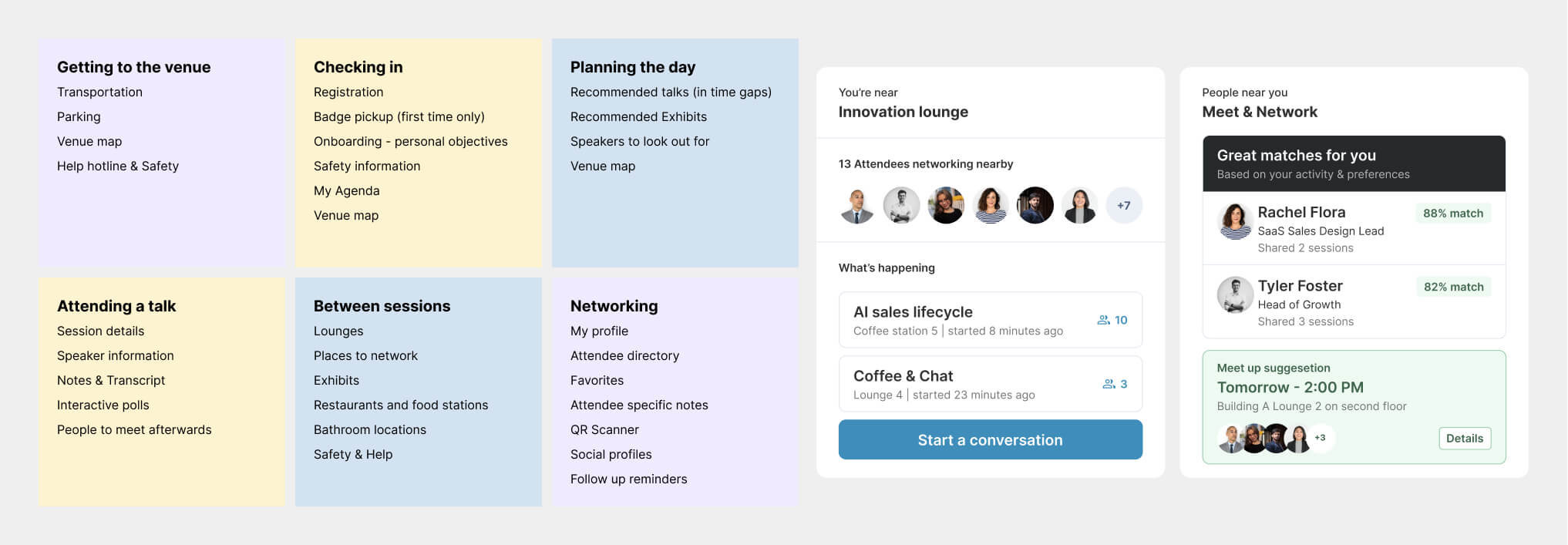
Asking to rearchitect the entire application is simply impossible. The strategy here is to start utilizing the data that already exists and start building dynamic cards that can surface on the existing dashboard at timely events. Below is a breakdown of the most common statuses of attendees, and the proposed tiles to show at those times.
If you remember our user groups from above, we planned a personal objectives section to understand and validate our hypothesis. Remember our data is based on only 100 people, whereas conferences can have a few thousand attendees, where each conference brings their own objectives.
Building additional layers
My recommendation was to enable the company to expand its hyper-personalized capabilities without having so much techdebt and legacy refactoring to deal with. As data comes from the thousands of attendees, the strategy can evolve and change. The challenge won't be about being hyper-personalized, it would be about simplifying and removing what already exists, without reducing the experience or making it more difficult to find features because its hidden behind a time-wall.